Thank you for the curve of my legs--
I like them.
Also thank you for my ingrown hairs,
even though they’re gross.
Thank you for fingers that have wrinkles on them--
nobody else’s wrinkles,
and I can slap and eat and touch with them.
Thank you for my round eyes
and my achy inner ears,
and the bump on my nose.
Thank you for my hair,
because it’s beautiful--
and even when it’s not,
thank you.
Thank you for the jagged, fisted cramps
that keep me awake once a month,
not just because they remind me
how good notpain is,
but because they are mine,
and only mine,
and this whole body is mine alone:
Mine.
Given to me mine,
mine as a mystery:
body, mind, soul.
And when I’m gasping or retching or bitching
Here I am
in the body, and the mind, and the soul
that was created as me.
~Ruthie

Showing posts with label Identity. Show all posts
Showing posts with label Identity. Show all posts
Saturday, April 13, 2013

Thursday, April 11, 2013
Soft Eyes, Open Heart: Doing Something that Scares Me
Once, during my time at Wheaton, I went downtown to Chicago to observe tech at Lookingglass, a prominent theater in the city. As I walked through the streets, I noticed for perhaps the first time that my shell was growing tougher--my face was set in a rock hard expression that was unrecognizable as the woman I really was. I texted a friend and asked, “How do you walk around a city with an open heart, and not as if you own it?”
“What else is love?” he texted back.
I was amazed at the complexity held in that simple response. And since that day, I have thought back to his words and wondered at my own idea of love. Can it be so large? Can it be carried on the hips, and held in the fingers, so that people on the street can be witness to it?
Since my decision to move to New York City to pursue a masters degree in theater, there have been a lot of thoughts swirling around in my head. And the memory of that big city’s--well, bigness--has come back to me. The swinging hips and turned up nose feeling. The feeling that I am somehow less than everyone else, and I have to overcompensate for that. The feeling of being scared.
My acting teacher in college used to say, “If something scares you, it’s worth doing.” (Within reason, obviously.) In the context of acting classes, that usually meant taking a risk on a scene; wearing something you wouldn’t normally, or choosing to reveal something about yourself that was personal. But what I began to realize, through those small risks, is how much of my life was ruled by fear. How many situations I flee because I don’t have the right category to file them under. How many conversations I cut short because I’m afraid of where they might go.
My teacher also used to tell us, during class, to have “soft eyes.” My immediate response to this was emotional--having soft eyes, at the time, meant being open hearted and ready to take what came. And somehow, these two ideas--that of doing things that scare me, and that of having soft eyes and an open heart--became wrapped up into one single choice. The choice to live my life with these ideas as a reality.
My time in Pittsburgh, these last two years, has been almost like a rest--a quiet period of growth and settling. Looking back on it, I can see how everything I have done has been useful, and good, and has helped me grow deeper into myself and my faith. But Pittsburgh, for me, has not been a place that has challenged me to combine fear with softness.
My sense is that New York will be just such a place. First of all, because I am scared to go. Much less scared than I would have been two years ago, but scared nonetheless. Scared, rightly so. The city--and especially the theater scene--is one of the fastest and smartest in the world. I am a girl who finds it challenging to attend a new church by herself. The world of networking and connections will be crazy hard for me. But I can't help thinking that what's important is not being fearless--it's recognizing fear and being okay with it. Understanding what scares you, and doing it anyway.
And I know this: God has provided this opportunity, and he has been preparing me. I also know the truth that if something scares me--with that wholesome, slightly thrilling fear--it’s worth doing. But how am I going to walk around a city that frightens me, and still keep my eyes soft and my heart open?
If the answer was easy, it wouldn’t be worth discovering. And my story is my own, and no one else’s. There is beautiful comfort in that thought, because it means that even if I move to New York and hate every second of my time there, the pieces of my life will still add up to a story worth telling. But I suspect that if I’m honest about my fear, and own it, and reveal it, and keep my eyes soft and my heart open, I will find things to give and to take during my time of studying and creating and breathing stale city air.
Because really, what else is love?
~Ruthie
“What else is love?” he texted back.
I was amazed at the complexity held in that simple response. And since that day, I have thought back to his words and wondered at my own idea of love. Can it be so large? Can it be carried on the hips, and held in the fingers, so that people on the street can be witness to it?
Since my decision to move to New York City to pursue a masters degree in theater, there have been a lot of thoughts swirling around in my head. And the memory of that big city’s--well, bigness--has come back to me. The swinging hips and turned up nose feeling. The feeling that I am somehow less than everyone else, and I have to overcompensate for that. The feeling of being scared.
My acting teacher in college used to say, “If something scares you, it’s worth doing.” (Within reason, obviously.) In the context of acting classes, that usually meant taking a risk on a scene; wearing something you wouldn’t normally, or choosing to reveal something about yourself that was personal. But what I began to realize, through those small risks, is how much of my life was ruled by fear. How many situations I flee because I don’t have the right category to file them under. How many conversations I cut short because I’m afraid of where they might go.
My teacher also used to tell us, during class, to have “soft eyes.” My immediate response to this was emotional--having soft eyes, at the time, meant being open hearted and ready to take what came. And somehow, these two ideas--that of doing things that scare me, and that of having soft eyes and an open heart--became wrapped up into one single choice. The choice to live my life with these ideas as a reality.
My time in Pittsburgh, these last two years, has been almost like a rest--a quiet period of growth and settling. Looking back on it, I can see how everything I have done has been useful, and good, and has helped me grow deeper into myself and my faith. But Pittsburgh, for me, has not been a place that has challenged me to combine fear with softness.
My sense is that New York will be just such a place. First of all, because I am scared to go. Much less scared than I would have been two years ago, but scared nonetheless. Scared, rightly so. The city--and especially the theater scene--is one of the fastest and smartest in the world. I am a girl who finds it challenging to attend a new church by herself. The world of networking and connections will be crazy hard for me. But I can't help thinking that what's important is not being fearless--it's recognizing fear and being okay with it. Understanding what scares you, and doing it anyway.
And I know this: God has provided this opportunity, and he has been preparing me. I also know the truth that if something scares me--with that wholesome, slightly thrilling fear--it’s worth doing. But how am I going to walk around a city that frightens me, and still keep my eyes soft and my heart open?
If the answer was easy, it wouldn’t be worth discovering. And my story is my own, and no one else’s. There is beautiful comfort in that thought, because it means that even if I move to New York and hate every second of my time there, the pieces of my life will still add up to a story worth telling. But I suspect that if I’m honest about my fear, and own it, and reveal it, and keep my eyes soft and my heart open, I will find things to give and to take during my time of studying and creating and breathing stale city air.
Because really, what else is love?
~Ruthie
Thursday, January 31, 2013
Thoughts on Male and Female from Hoekema
"(An) ...observation is this: Man and woman together are the image of God. We have already made the point... that man's having been created male and female is an essential aspect of the image of God. Karl Barth, as we saw, lays great stress on this point: man's existence as male and female is not something secondary to the image, but is at the very heart of the image of God. This is so not just because of the difference in sex between man and woman - since this distinction is found also among the animals - but because of far-reaching differences in personality between the two. Man's existence as male and female means that man as a masculine being has been created for partnership with another being who is essentially like him but yet mysteriously unlike him. It means that woman is the completion of man's own humanity, and that man is wholly himself only in his relationship with woman.
This implies that man is not the image of God by himself, and that woman cannot be the image of God by herself. Man and woman can only image God through fellowship with each other - a fellowship that is an analogy of the fellowship God has within himself. The New Testament teaches that God exists as a Trinity of "Persons" - Father, Son, and Holy Spirit. Human fellowship, as between man and woman, reflects or images the fellowship between God the Father, God the Son, and God the Holy Spirit. And yet there is a difference. For persons as we know them are separate beings or entities, whereas God is three "Persons" in one Divine Being. Human fellowship, therefore, is only a partial analogy of divine fellowship - yet it is an analogy.
It is there unfortunate that the English language has no word like the German Mensch or the Dutch word mens, both of which mean "human being, whether male or female." The English word man has to serve a double purpose: it may mean either (1) "male or female human being" (the generic sense) or (2) "male human being." This double use of the word man seems to betray a typical masculine kind of arrogance, as if the male is the carrier of all that is involved in being human. But man can only be fully human in fellowship and partnership with woman; woman complements and completes man, as man complements and completes woman. When we use the word man in the generic sense, therefore... we must always keep this in mind.
The fact that man and woman together image God will still be true in the life to come. Jesus once said, "When the dead rise, they will neither marry nor be given in marriage; they will be like the angels in heaven" (Mark 12:25). The similarity to angels, however, means only that there will be no marriage at that time; it does not mean that the differences between men and women will no longer exist. In the final resurrection we shall not loose our individuality; that individuality will be not only retained but enriched, and our maleness or femaleness is the essence of that individual existence.
In the life to come, therefore, not only shall we continue to image God as men and women together, but we shall then be able to do this perfectly. We do not know how such fellowship and partnership between men and women will be carried out in a situation where there will be no marriage. But we do know this: Only then shall we see what the relationship between men and women can be like in its richest, fullest, and most beautiful sense."
- Created in God's Image, by Anthony A. Hoekema
This implies that man is not the image of God by himself, and that woman cannot be the image of God by herself. Man and woman can only image God through fellowship with each other - a fellowship that is an analogy of the fellowship God has within himself. The New Testament teaches that God exists as a Trinity of "Persons" - Father, Son, and Holy Spirit. Human fellowship, as between man and woman, reflects or images the fellowship between God the Father, God the Son, and God the Holy Spirit. And yet there is a difference. For persons as we know them are separate beings or entities, whereas God is three "Persons" in one Divine Being. Human fellowship, therefore, is only a partial analogy of divine fellowship - yet it is an analogy.
It is there unfortunate that the English language has no word like the German Mensch or the Dutch word mens, both of which mean "human being, whether male or female." The English word man has to serve a double purpose: it may mean either (1) "male or female human being" (the generic sense) or (2) "male human being." This double use of the word man seems to betray a typical masculine kind of arrogance, as if the male is the carrier of all that is involved in being human. But man can only be fully human in fellowship and partnership with woman; woman complements and completes man, as man complements and completes woman. When we use the word man in the generic sense, therefore... we must always keep this in mind.
The fact that man and woman together image God will still be true in the life to come. Jesus once said, "When the dead rise, they will neither marry nor be given in marriage; they will be like the angels in heaven" (Mark 12:25). The similarity to angels, however, means only that there will be no marriage at that time; it does not mean that the differences between men and women will no longer exist. In the final resurrection we shall not loose our individuality; that individuality will be not only retained but enriched, and our maleness or femaleness is the essence of that individual existence.
In the life to come, therefore, not only shall we continue to image God as men and women together, but we shall then be able to do this perfectly. We do not know how such fellowship and partnership between men and women will be carried out in a situation where there will be no marriage. But we do know this: Only then shall we see what the relationship between men and women can be like in its richest, fullest, and most beautiful sense."
- Created in God's Image, by Anthony A. Hoekema
Friday, January 18, 2013
Mothers to Daughters: "I Am Beautiful"
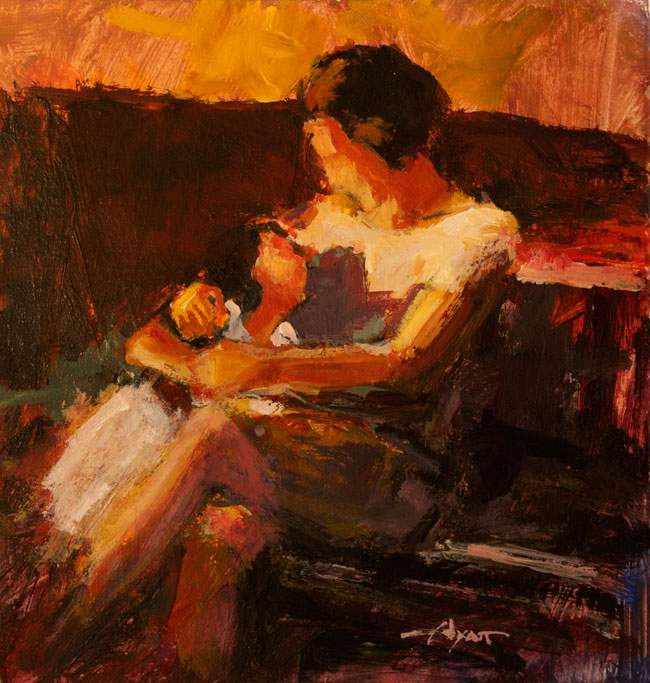
We are a society of all types of women. We are old and we are young, we are short and we are tall, we are big and we are small. Supposedly, we are all beautiful. But as I think more about older women, and the way we live in relation to one another--and particularly as I live my American media and culture infused life--I know, as we all know, that this message is not the one we believe. And our fixation on beauty (or our lack of beauty) often results in the fact that we don’t realize how influential our own actions are. Especially as we relate to each other. So what I want to say is this:
Mothers should tell their daughters that they--the mothers--think they themselves are beautiful.
This might be a shocking idea, especially in the Christian subculture where modesty is a hot topic and false modesty abounds. Plus, beauty itself is a tricky subject, because the question, “What is beauty,” is so slippery. No one denies that most of us have built in triggers that go off when certain physical characteristics appear. However, there’s also no denying that love transforms the beauty of the beloved--and not just in the way of forgetting physical flaws. As love deepens, a lover often begins to truly see their beloved as physically beautiful, even if he or she is not a great beauty. The same goes for familial love. Beauty, I believe, is a combination of body and soul. But back to the issue at hand.
My own mother, like every woman, has her own insecurities. But I have no memory of her discussing her personal appearance as I grew up. I never heard her complain about her weight, or wish for a different hair color, or talk about another woman’s beauty relative to her own. It’s only now that I am an adult myself that she has started sharing her insecurities with me. I am only just beginning to understand how priceless a gift she gave me. Until I reached high school I had a minimal amount of body-related angst. I wanted to look pretty, and I coveted and longed for my friends’ clothing and accessories. But the thought that my body might not be good enough did not occur to me until I was well into puberty.
I’ve never really thanked my mother for this. I’m not even sure she did it intentionally. But I know that it was huge. And I believe that as women, and as Christians, we can take this one step further. We can tell our daughters that they are beautiful, surely. But we can also tell them that we are beautiful.
As with everything, this requires thought and wisdom. A longing for and appreciation of beauty can easily become vanity. This was a timeless moral until the 20th century, when the pop world went crazy and we all became inundated with hundreds of images a day. So something that would have perhaps seemed incredibly selfish a hundred years ago--proclaiming one’s own beauty--has become a matter of importance. Let me explain.
When I was a little girl, I believed that my mother was beautiful. Truly, absolutely beautiful. She was strong and protective and wise, and to me, she was perfect. She was my mother. If she had told me she was not beautiful--if she had complained about her body, and had let me see that her imperfections were unacceptable--I would have been devastated. And then I would have had to ask, “Well, who is beautiful, then?”
When little girls aren’t allowed to believe that their mother is beautiful, the search leads them to the unreal expectations we all face as teenagers and grown women. But if, instead, mothers decided to put aside the disappointment of extra weight and sagging skin, and instead told their daughters, “Yes, it’s true--I am beautiful,” those little girls might have an extra couple of years to soak up the idea that beauty is more than just what they see on a magazine cover. And by the time they entered middle school and high school, maybe they would have at least this one thought in the backs of their minds: “My mother thinks she’s beautiful. And so do I. And if she truly thinks that, maybe beauty isn’t what I’m being told. Maybe it means something much deeper and wider.”
Of course, this presupposes that mothers are discussing beauty with their daughters in all of its fullness--that our beauty is riddled with imperfections and yet we are grateful for the bodies that give breath to our spirits. Perhaps real beauty lies in this idea: that though our bodies are so imperfect, they are our bodies. And because we are not just given bodies to wait out the time until we can fly off and become disembodied souls (thank you Wheaton for helping me understand the heresy of Gnosticism...) we should rejoice in the bodies God has given us. Be they broken, or whole. This doesn’t mean physical beauty is all equal. We have eyes. But physical beauty is much more than our culture leads us to believe. Especially when we look at our bodies through the lens of people who are whole, and not just souls trapped inside flesh. I may not have my neighbor’s hair, but it is my hair. And there is so much beauty in it. These are the kinds of thoughts mothers (and all women) should be examining, and should be unafraid to discuss with their daughters.
But surely, there is room for error here. By telling our daughters that we’re beautiful, they might tend toward believing that physical beauty is more important than it really is. But we all hunger for beauty, even if the topic is taboo. And it’s not taboo...every little girl encounters discussion of beauty, from her first Disney princess movie to her first peek at a magazine in the grocery store aisle. It is better for a mother to claim her own beauty, in a thoughtful and careful way, than for a little girl to encounter it and have no one who is safe to attribute the characteristic to.
Instead of believing that they do not possess beauty and it doesn’t matter, girls should believe that they do possess beauty, and it does matter. Just not in the same way our culture constantly tells us. Beauty as it should be is quiet, and is real, and sometimes carries a few extra pounds around the middle. And daughters need to know that. And another thing: most mothers tell their daughters that they--the daughters--are beautiful. And yet what daughter doesn’t believe her mother is blinded by her motherly love? But if a mother claims her own beauty, and explains how beauty is a mixture of body and soul, healthy and full, perhaps the daughter will begin to believe it when her mother insists that she is beautiful.
None of us thinks we’re beautiful every day. Even the ones who are beautiful by the magazine covers’ standards have bad days. But if we make a point of telling our daughters about true beauty (both the inside and the outside kind) I think we ourselves will have to question if what we say is true or not. There will always be pretty people. But beauty, more often than not, is something we can choose.
~Ruthie
~Ruthie
Sunday, October 14, 2012
More Thoughts on Calling
I chuckled a couple weeks ago upon opening Facebook and finding Ruthie's post about calling. I've been thinking about writing a post on the same topic for the past month or so and was excited to see that my sister has also been pondering the issue. We must be going through times of transition.
A couple years ago, I was trying to think through how we discern calling in our lives. Life at that point was extremely confusing, feeling flat and directionless. I am convinced moments of enlightenment come at the most inconvenient times and clarity of mind always seemed to come while driving with the radio blaring or while in the shower - times when grabbing a pen to jot down thoughts was nearly impossible. So to remember the thoughts on calling coming to me, I had to tuck them away and quickly internalize beyond the moment.
We all struggle with calling, but I think at this time, women especially struggle with it. The paths of our lives are no longer limited, predicted. But with limitless options, comes limitless confusion and angst over what to do. For the first time in the history of the Western world, women can actively choose the things they will pursue in life. But often something so great as the ceiling being lifted feels like the floor being pulled out from under our feet.
Most Americans have grown up being told they have the power to accomplish their dreams whatever they might be. Granted, not all Americans actually come from a socio-economic background where this is realistic, but still, we have all grown up hearing it in our media and education. We all want purpose in our lives. We all feel a need to be fulfilled. It surprises me how often the word "calling" is used in a secular context, but this shouldn't be because calling is more than just a Christian catch-word; calling is the idea that something can encompass us, lift us higher, and give us a direction in which to go. Who doesn't want that?
And yet, at the end of the day, we feel lost. The problem, I realized, is that I cannot understand calling unless I understand from whence it comes. Calling cannot be created within myself; its very nature implies an origin from outside of me. To be "called" is to heed an authoritative voice not my own. If I have a calling, I must find the caller and I must listen to what the caller instructs. As a Christian, it naturally follows that my caller is my Creator, the God who made me and understands what gives my life definition.
Understanding who I am at the hands of the the Creator is the beginning of all explorations in calling. In the lingo of my old alma matter, we all have a "Big C" calling - the calling that trumps all others and defines us to the core. This calling is non-negotiable, essential to our very existence. It's a calling from our origins. For in the beginning, God called us to know him. He is intensely, purely relational and this aspect of his nature spilled over into us as he created the world. He made his creation utterly dependent on him, so much so that should our relationship with him be broken, the central aspect of our existence is lost.
Furthermore, God's creative nature was infused in us, his creation. From the beginning, God burst forth with robust and breathtaking activity. He is not a God at repose, but rather a God delighting in exerting his abilities. And he directly tells us to follow in his footsteps. The one who is capable of calling us delights in working to create something good and he fundamentally exists in relationship. Ultimately, our "Big C" calling at all stages in life is to reflect these two essential aspects of the Caller back to him.
But understanding these big picture ideas of calling does not necessarily help me understand what job to take or who to marry or how to juggle the complex dynamics of life. It explains the purpose and significance inherent in my life, but it doesn't help explain the paths before me. It doesn't give me a nice list of dos and don'ts concerning normal decisions. We recognize here that after our "big C" calling, we all have "little c" callings, usually multiples of them. These callings are good, important, often necessary, and usually flexible. They may last a lifetime or they may stay for a day, but all are real and worthy of our careful thought and consideration.
What are they? Our little callings are particular ways in which we live out the big calling at various times in our lives. They are our work, our family, our friendships, our planet, our communities. They are big all-encompassing missions to further good in this world. And they are minute tasks that we do simply to remain faithful. Our perception, management, and ultimately, appreciation of them are vital to understanding the satisfaction God gives us. And in trying to comprehend them, there are 3 things I've noticed about them.
One - God gives us themes.
We often start our thinking about calling by asking the question, "If I could do anything, what would it be?" We try to view our lives as a blank page to be filled with steps towards an inflated view of some thing "to do." But nowhere in Scripture is calling described this way. Instead, we are presented with collections of stories that tell us about God’s calling on particular people’s lives.
The key to telling a good story is having a grasp on the themes it involves. What kind of story is it? If the universe is God's story, than no matter your place in it God has a role for you. So what are the themes God is weaving into your life, or probably more accurately, what are some of God's themes that he is weaving your life into?
Bringing this down to a really practical level - it is important to reflect on what has already been present in your life to help determine what you might be being called to in the future. Have you had success in certain endeavors in the past? Have you often found yourself involved in something? Are there people in your life that have required your focus? Is there a past sin or failure God has redeemed and is using for good in your or others' lives?
Do not think about calling in a vacuum. Give yourself time to reflect and consider where these themes might take you.
Two - We don’t come to know our calling in isolation from community and relationships.
As Americans, we live extremely individualistic lives. We might ask for and receive input from family or mentors concerning large and small decisions, but very rarely is the decision not ours. This is especially true among the younger generations where we are told from a young age that what we want to do in life depends on us and us alone.
As mentioned above, though, our Creator is intensely relational and he made us to exist in community. He is not going to ignore the people in our lives in the callings he gives us. Though not without its challenges, this point is often more obvious to married women and mothers. But it is very strange for a single woman to really consider relationships when thinking about calling. But is anyone truly "single"? You might be unmarried, but no one is free from relationships and responsibilities to them.
Three - Calling does not equal planning.
The bottom line is we have no right to demand clarity from God. There are aspects of calling that will always remain fuzzy. This is not to say we should not plan or organize (a gift to truly be valued!), but rather to constantly ask ourselves: where am I substituting planning for calling? In what ways do I need to listen before I act?
In my own life, I do not profess to have all of the answers concerning calling. I cannot predict, force, or plan my way into certain paths for the next five decades of life. But with all of that said, I do feel confident in saying I have some idea of God's calling in my life. I can look back and see the themes of internationality, thought-life, and hospitality that I feel confident will carry on into my future. I am clear on the relationships I need to be committed to. And while I like to plan and strive towards certain goals, I am constantly reminding myself that my planning is not what counts, but my faithfulness to listen.
Ultimately though, at the end of the day, I don't have peace for a single one of these reasons. I find peace because I know the God who made me capable of all the above. My true calling, my true sense of self comes from him and the knowledge that it is his image I bear.
~Hannah
A couple years ago, I was trying to think through how we discern calling in our lives. Life at that point was extremely confusing, feeling flat and directionless. I am convinced moments of enlightenment come at the most inconvenient times and clarity of mind always seemed to come while driving with the radio blaring or while in the shower - times when grabbing a pen to jot down thoughts was nearly impossible. So to remember the thoughts on calling coming to me, I had to tuck them away and quickly internalize beyond the moment.
We all struggle with calling, but I think at this time, women especially struggle with it. The paths of our lives are no longer limited, predicted. But with limitless options, comes limitless confusion and angst over what to do. For the first time in the history of the Western world, women can actively choose the things they will pursue in life. But often something so great as the ceiling being lifted feels like the floor being pulled out from under our feet.
Most Americans have grown up being told they have the power to accomplish their dreams whatever they might be. Granted, not all Americans actually come from a socio-economic background where this is realistic, but still, we have all grown up hearing it in our media and education. We all want purpose in our lives. We all feel a need to be fulfilled. It surprises me how often the word "calling" is used in a secular context, but this shouldn't be because calling is more than just a Christian catch-word; calling is the idea that something can encompass us, lift us higher, and give us a direction in which to go. Who doesn't want that?
And yet, at the end of the day, we feel lost. The problem, I realized, is that I cannot understand calling unless I understand from whence it comes. Calling cannot be created within myself; its very nature implies an origin from outside of me. To be "called" is to heed an authoritative voice not my own. If I have a calling, I must find the caller and I must listen to what the caller instructs. As a Christian, it naturally follows that my caller is my Creator, the God who made me and understands what gives my life definition.
Understanding who I am at the hands of the the Creator is the beginning of all explorations in calling. In the lingo of my old alma matter, we all have a "Big C" calling - the calling that trumps all others and defines us to the core. This calling is non-negotiable, essential to our very existence. It's a calling from our origins. For in the beginning, God called us to know him. He is intensely, purely relational and this aspect of his nature spilled over into us as he created the world. He made his creation utterly dependent on him, so much so that should our relationship with him be broken, the central aspect of our existence is lost.
Furthermore, God's creative nature was infused in us, his creation. From the beginning, God burst forth with robust and breathtaking activity. He is not a God at repose, but rather a God delighting in exerting his abilities. And he directly tells us to follow in his footsteps. The one who is capable of calling us delights in working to create something good and he fundamentally exists in relationship. Ultimately, our "Big C" calling at all stages in life is to reflect these two essential aspects of the Caller back to him.
But understanding these big picture ideas of calling does not necessarily help me understand what job to take or who to marry or how to juggle the complex dynamics of life. It explains the purpose and significance inherent in my life, but it doesn't help explain the paths before me. It doesn't give me a nice list of dos and don'ts concerning normal decisions. We recognize here that after our "big C" calling, we all have "little c" callings, usually multiples of them. These callings are good, important, often necessary, and usually flexible. They may last a lifetime or they may stay for a day, but all are real and worthy of our careful thought and consideration.
What are they? Our little callings are particular ways in which we live out the big calling at various times in our lives. They are our work, our family, our friendships, our planet, our communities. They are big all-encompassing missions to further good in this world. And they are minute tasks that we do simply to remain faithful. Our perception, management, and ultimately, appreciation of them are vital to understanding the satisfaction God gives us. And in trying to comprehend them, there are 3 things I've noticed about them.
One - God gives us themes.
We often start our thinking about calling by asking the question, "If I could do anything, what would it be?" We try to view our lives as a blank page to be filled with steps towards an inflated view of some thing "to do." But nowhere in Scripture is calling described this way. Instead, we are presented with collections of stories that tell us about God’s calling on particular people’s lives.
The key to telling a good story is having a grasp on the themes it involves. What kind of story is it? If the universe is God's story, than no matter your place in it God has a role for you. So what are the themes God is weaving into your life, or probably more accurately, what are some of God's themes that he is weaving your life into?
Bringing this down to a really practical level - it is important to reflect on what has already been present in your life to help determine what you might be being called to in the future. Have you had success in certain endeavors in the past? Have you often found yourself involved in something? Are there people in your life that have required your focus? Is there a past sin or failure God has redeemed and is using for good in your or others' lives?
Do not think about calling in a vacuum. Give yourself time to reflect and consider where these themes might take you.
Two - We don’t come to know our calling in isolation from community and relationships.
As Americans, we live extremely individualistic lives. We might ask for and receive input from family or mentors concerning large and small decisions, but very rarely is the decision not ours. This is especially true among the younger generations where we are told from a young age that what we want to do in life depends on us and us alone.
As mentioned above, though, our Creator is intensely relational and he made us to exist in community. He is not going to ignore the people in our lives in the callings he gives us. Though not without its challenges, this point is often more obvious to married women and mothers. But it is very strange for a single woman to really consider relationships when thinking about calling. But is anyone truly "single"? You might be unmarried, but no one is free from relationships and responsibilities to them.
Three - Calling does not equal planning.
The bottom line is we have no right to demand clarity from God. There are aspects of calling that will always remain fuzzy. This is not to say we should not plan or organize (a gift to truly be valued!), but rather to constantly ask ourselves: where am I substituting planning for calling? In what ways do I need to listen before I act?
In my own life, I do not profess to have all of the answers concerning calling. I cannot predict, force, or plan my way into certain paths for the next five decades of life. But with all of that said, I do feel confident in saying I have some idea of God's calling in my life. I can look back and see the themes of internationality, thought-life, and hospitality that I feel confident will carry on into my future. I am clear on the relationships I need to be committed to. And while I like to plan and strive towards certain goals, I am constantly reminding myself that my planning is not what counts, but my faithfulness to listen.
Ultimately though, at the end of the day, I don't have peace for a single one of these reasons. I find peace because I know the God who made me capable of all the above. My true calling, my true sense of self comes from him and the knowledge that it is his image I bear.
~Hannah
Saturday, August 25, 2012
Why I Have Begun to Question the Word "Calling"
This summer has been a series of emotional ups and downs.
From the beginning of June, when my internship ended, to, well, now, I have
been in a continuous state of limbo as far as what my life this upcoming year
will be like, and whether the dreams and plans I have for my life will, down
the road, be possible. It’s been very uncomfortable, and stressful. But I’ve
been learning.
At the end of my senior year of college, my acting teacher
Mark Lewis gave me some great advice—to allow myself to slow down. To do
something meaningful, of course. But to take the time to figure out where I was
meant to be, and what I should be doing. In his words: “You should be able to
wake up in the morning and say, ‘I think I’ll have a cup of tea today.’ And do
it.” I started crying when he said those words. And that told me something very
important about myself—that I needed to follow his advice and give myself some
breathing room apart from the non-stop world of college.
I did a theater internship part time, and to make some money
I worked as a nanny. I was blessed to have two great families and four
incredible children to nanny. And as I worked at both these “filler” jobs—an
internship that didn’t pay me and as a nanny with no benefits—I began to have
my first doubts about the way we, as Christians, use the word “calling.” If you
had asked me a year ago what my calling was, I probably would have said that it
was to be an acting teacher. But as the year went on and I opened my heart to
the children I spend time with every week, I started to question the use of
that word.
By referring to our careers as our “callings,” I think we
misinterpret the real meaning of God’s calling in our lives. As I spent time
with Ruby and Miles and Zane and Andrew, the children I have gotten to know and
love, I recognized that my career will not be as their nanny. But I am
convinced that my “calling,” during the time that I watch them, is to be their
nanny. I have come to believe that our calling is not our dream career, or even
the career that best uses our talents and skills. Our calling is to be doing
whatever it is we are doing right now, in this moment as we are breathing and
thinking and loving. Our calling is to serve God through our actions, and to
become more like him, whatever we are doing.
As I grew more and more sure of this, and as my internship
ended and I was faced with the fact that I was still nannying, but was no
longer working for a theater, my eyes began to open to the way I think about
myself, and the things I have to do to get approval. My goal is to be an acting
teacher. That will not change. God has given me the skills and the training to
be an acting teacher, and I intend to pursue those opportunities. But while I
waited, and waited, and waited for
schools to respond to me, and things to happen, I got to see a pretty clear
glimpse of what I think is important. What I really think, when it comes down to it—not what I say I
think, or think I think. And it shocked me how many of my decisions are based
on the way I think people think of me, or things that I think people think I
should have or do. (See. It’s so messed up it’s even hard to understand
grammatically.)
Things like living at home, or driving a beater car, or
being on my parents’ health insurance. Or being a nanny. Feeling like I had to
apologize every time I told someone what I did for a living, or add a long
story about what I really want to do.
And I had to ask myself when we as a culture began to decide which jobs you
have to apologize for, and which ones you don’t. When did it stop being about
the fact that I am a really good nanny, and the children I watch are being
served by my efforts?
I don’t want to get on a soapbox. Trust me, I know what it’s
like to get a college degree and be frustrated about not using it like I
envisioned. But the point is, whatever we’re doing, if we’re doing it well, we are using that degree. We 20-somethings have been
trained to look ahead and push forward, and we’ve also been told that we can do
whatever we want. I don’t know whether we were also told that we can do it
immediately, but we definitely act like we should. And I’m just not sure
that—especially as Christians—we should be ashamed of the “filler” jobs most of
us have to do while we chart our career paths.
~Ruthie
Tuesday, July 31, 2012
Performance of "Currency"
This is a video of a piece I wrote and performed at my friend Sarah Carleton's fundraiser for International Justice Mission and Restore International. It was a really wonderful event...for more details on that, you can visit this site.
Please
forgive the quality of the video. And because the quality is bad, it's
difficult to tell what I'm doing at the beginning of the piece. I am mimicking
the photographs of women pasted to the wall. The song played at the beginning
is "Grace," by the band U2, and the excerpt of dramatic reading in
the middle is from "The Great Divorce," by CS Lewis.
~Ruthie
Writing and performing a piece about beauty is not easy, if
only because it becomes so personal. In working through the process of writing,
staging, and performing Currency, I had
to become okay with the fact that what the piece says about other people, and
what the piece says about me, are both equally apparent. The only way to have
the audience experience questions I wanted them to ask was through the medium of
my own explorations and insecurities, and my own physical work, presented on
stage. That was very scary.
A few years ago I happened upon a quote by CS Lewis, in the
novel That Hideous Strength. He writes:
“The beauty of the female is the root of joy to the female as well as to the
male, and it is no accident that the goddess of Love is older and stronger than
the god.” I was captivated by this
quote, mostly because I have felt its truth myself. It was from this line of
thought that I ultimately found the pieces to create Currency. I began to wonder: what if we acknowledged our
limitations, and our preferences in the area of beauty? How would it change the
way we act, towards ourselves and toward others, if we were honest about the
glory and the danger of being instruments that can give and receive pleasure,
simply by being embodied?
In a world of extremes, these are dangerous questions. Like
C.S. Lewis’s Ghost, in the excerpt quoted from The Great Divorce, it is so impossible to see ourselves without
comparison. And perhaps the corruption we experience in this world, right down
to the sex trade itself, can be traced back to the impossible task of seeing
ourselves not through eyes that weigh, and compare, but through eyes made holy
by the grace of God—the grace C.S. Lewis’s Spirit is so tenaciously trying to
offer the shabby female Ghost.
In any case, these are questions we have to ask. Questions I
had to ask, and I ask you to continue asking. Even at the risk of discovery.
~Ruthie
Friday, July 1, 2011
Fenghuang as Needed Mythology
The Fenghuang is part of ancient Chinese cosmology and was responsible along with three other mythological creatures for the creation of the world. After these creatures had created our world, they divided it into four sectors of north, south, east, and west, each taking dominion over one. The Fenghuang’s domain was the south and as a result, the summer. This mythological creature’s body symbolizes the six celestial bodies with its head as the sky, eyes as the sun, back as the moon, wings as the wind, feet as the earth, and finally, tail as the planets.

The actual physical appearance of the Fenghuang is a composite of many different animals. The creature is made up of the beak of a cock, the face of a swallow, the forehead of a fowl, the neck of a snake, the breast of a goose, the back of tortoise, the hindquarters of a stag, and the tail of a fish. This sounds like quite the odd looking creature to me, but interestingly enough, artistic depictions of the Fenghuang never seem to show the bird’s described physical make-up. Instead it is depicted as a beautiful and graceful composite of many bird varieties, most often with a peacock tail with feathers made of the five fundamental colors black, red, green, white, and yellow (corresponding to the five elements of water, fire, wood, metal, and earth).
In China’s most ancient mythology, the Fenghuang was actually two birds united together. Feng represented the male entity and huang the female. United together to create the Fenghuang, they were a metaphor of the yin and yang, as well as the sacred union of male and female. Used to symbolize peace and harmony, the Fenghuang was said to appear only at the beginning of a new era or at the ascension to the thrown of a benevolent ruler. More recently in China’s long history, though, the Feng and Huang have been merged into one female creature, the Fenghuang, so that the ancient mythological figured could be paired with the male dragon as a symbol for the empress and emperor. In more recent centuries, the dragon and phoenix are often seen paired together as a symbol for marriage and unity.
What draws me to the Fenghuang is a particular ancient description of its symbolism. In the Shan Hai Jing (山海经), a classic of Chinese mythology, each part of the Fenghuang’s body symbolizes a word. The head represents virtue (德), the wings represent duty (義), the back represents propriety (禮), the abdomen represents belief (信), and the chest represents mercy (仁). What a beautiful symbol for femininity!
When I think about contemporary American culture, it’s hard for me to come up with any myths as deep symbols for femininity. We have larger than life caricatures of women as sex toys, power-hungry achievers, or spineless and wimpy prey, but there is a fundamental difference between myth and caricature. Caricature is based on what people perceive to exist. Myth presents what people want to be. The beauty of mythology is that it takes us beyond reality and gives us a chance to create an ideal. What does it say about us women if we do not have any collective symbols beyond our reality to remind us of what we hope to become?
If I could pick a mythological symbol to inspire modern women, I would pick the Fenghuang. The creature flies with beauty and strength, ushering in times of peace and harmony. It is virtuous as it carries out its duty. Representing a life filled with belief (I would add, belief in something bigger than itself), the Fenghuang is marked by mercy and compassion. Lastly, the Fenghuang symbolizes propriety, a lost word in contemporary times. But the word has richer meaning than its surfaces usage. In addition to referring to manners of behavior, propriety means “appropriateness to the purpose or circumstances” and “rightness or justness.” Who could argue that justness and an understanding of one’s circumstances are a beautiful component of feminine ideals?
I wish our society would dream again and intrigue us with its ideals.
~Hannah
Tuesday, October 19, 2010
"Carved to Adorn" Briefly Explained
People sometimes ask me if I considered myself a feminist. I don't like this question because the word has too many definitions for a straight answer, especially for someone who primarily identifies herself as a Christian. I have stayed clear of the label and the older I get, the more strongly I avoid it. But I do passionately care about the unique issues women face and am proud of our ability to openly discuss and debate these issues as independent beings made in God's image.
Our current ownership of the debate concerning womanhood, femininity, image, body, etc. is an amazing gift from the Creator after millennia of being the silent sex. I am impressed by these times in the West; women finally have education, financial independence, freedom from many forms of physical marring and deformity, abundant legal rights, and most importantly, our own voice. Never before have women held so much power.
But power is a cheating seducer. With sweet promises of fulfillment, freedom, and safety, women's empowerment led us to believe all can be made right. It did not, however, tell us about the loneliness, frustration, and compromise it would require in return. Where once womanhood was personified by heroines who sought escape from the doldrums of an uneducated and dependent existence, today's TV shows, movies, and literature depict women who can say and do as much as they want, but are plagued by an abysmal void within and isolation from true community without.
Both the secular and Christian conversations concerning womanhood have centered on rights and actions. We love to make issues black and white by discussing a person's given or denied ability to do something. What is not frequently discussed are attributes. We want to know what women can do, but forget to think about who women should to be. Of course, the two cannot be entirely separated. Who a person is will inform their actions and vice versa. But I believe this focus on female action is what has given women the freedom and ownership they now enjoy, while the neglect of thoughtful consideration towards character has in part lent a hand to the lonely aimlessness now plaguing women.
As I struggled in college with questions concerning femininity and womanhood, I came across Psalm 144:12. The second part of the verse reads, "...and our daughters will be like pillars, carved to adorn a palace..." I have not heard a more poetic description of God's view of womanhood. David is describing a time of rich blessing in the country and along with bountiful food, peaceful streets, and strapping young men, he writes this description of blessed women.
Why do I like it? First, the daughters are described as pillars. They are strong and unbreakable. They are admired for their ability, not for their weakness, which affirms the achievements and progress women have made in society. But second, the purpose these women are given is for the palace. They are not made to be alone; they don't function self-sufficiently. Rather, they are made to support the larger structure and faithfully lend it their individual strength. We are made to live in and for community and the modern woman needs to rethink her agenda if it excludes all but her own independent life.
Finally, we come to the name of this blog, my favorite part, "carved to adorn." Another translation uses the word "cut," another "sculptured," and yet another "hewn." These words do not imply an easy process for the pillar. It is not sheltered, nor is it pampered. Under the hands of a Craftsman, the pillar is put through a process that involves difficulty and struggle. But in the end, the pillar is beautiful, designed to display its hard won beauty for the delight of all who see the palace.
Women, God has created us to be strong. It is how he has made us. God created us to live in relationship, to use our strength for the "structures" we belong to, not for our own sakes. God carves each of us by giving us experiences, gifts, and trials. He gives us these that we might be a delight to those around us. We are carved to adorn...
~Hannah
Our current ownership of the debate concerning womanhood, femininity, image, body, etc. is an amazing gift from the Creator after millennia of being the silent sex. I am impressed by these times in the West; women finally have education, financial independence, freedom from many forms of physical marring and deformity, abundant legal rights, and most importantly, our own voice. Never before have women held so much power.
But power is a cheating seducer. With sweet promises of fulfillment, freedom, and safety, women's empowerment led us to believe all can be made right. It did not, however, tell us about the loneliness, frustration, and compromise it would require in return. Where once womanhood was personified by heroines who sought escape from the doldrums of an uneducated and dependent existence, today's TV shows, movies, and literature depict women who can say and do as much as they want, but are plagued by an abysmal void within and isolation from true community without.
Both the secular and Christian conversations concerning womanhood have centered on rights and actions. We love to make issues black and white by discussing a person's given or denied ability to do something. What is not frequently discussed are attributes. We want to know what women can do, but forget to think about who women should to be. Of course, the two cannot be entirely separated. Who a person is will inform their actions and vice versa. But I believe this focus on female action is what has given women the freedom and ownership they now enjoy, while the neglect of thoughtful consideration towards character has in part lent a hand to the lonely aimlessness now plaguing women.
As I struggled in college with questions concerning femininity and womanhood, I came across Psalm 144:12. The second part of the verse reads, "...and our daughters will be like pillars, carved to adorn a palace..." I have not heard a more poetic description of God's view of womanhood. David is describing a time of rich blessing in the country and along with bountiful food, peaceful streets, and strapping young men, he writes this description of blessed women.
Why do I like it? First, the daughters are described as pillars. They are strong and unbreakable. They are admired for their ability, not for their weakness, which affirms the achievements and progress women have made in society. But second, the purpose these women are given is for the palace. They are not made to be alone; they don't function self-sufficiently. Rather, they are made to support the larger structure and faithfully lend it their individual strength. We are made to live in and for community and the modern woman needs to rethink her agenda if it excludes all but her own independent life.
Finally, we come to the name of this blog, my favorite part, "carved to adorn." Another translation uses the word "cut," another "sculptured," and yet another "hewn." These words do not imply an easy process for the pillar. It is not sheltered, nor is it pampered. Under the hands of a Craftsman, the pillar is put through a process that involves difficulty and struggle. But in the end, the pillar is beautiful, designed to display its hard won beauty for the delight of all who see the palace.
Women, God has created us to be strong. It is how he has made us. God created us to live in relationship, to use our strength for the "structures" we belong to, not for our own sakes. God carves each of us by giving us experiences, gifts, and trials. He gives us these that we might be a delight to those around us. We are carved to adorn...
~Hannah
Wednesday, June 23, 2010
Gender roles: What do Isak Dinesen and Swiss Family Robinson have in common?

Hannah recently brought to my attention the new movie Robin Hood and the fact that Marian is wielding a sword in the final battle, which just sort of seems ridiculous. The more I thought about it, the more I started to think about the fact that a lot of times, women fighting in action movies seems silly, and I began to wonder why that is.
It’s such a complicated issue. For most of Robin Hood I really enjoyed Marian’s character. I liked that she fought off the thieves back at her farm, and I think that many women would have (and should have) been capable of protecting themselves and their own. But when I saw her emerge from that helmet in the battle scene, I just started laughing, and it’s the same in lots of movies that have the obligatory heroine-in-battle-beating-on-the-men scene. But why, if, as a strong woman, I believe that women should be capable of many things, do scenes like that make me so annoyed?
Maybe part of it is the very fact that it’s obligatory. There are lots of great women in battle—in both movies and in books. Eowyn from The Lord of the Rings is a Snoke woman favorite, and there is nothing at all annoying or humorous about her participation in battle. But it seems like every movie has to have that scene with the female beating on everyone, and because of that, the women in those movies lose their originality. They are annoying because they are just more stereotypical butch women.
So why is it different for men? Again, this is a really complicated issue, and I have only been giving it serious thought for a couple hours now. But I think that there’s something deeper going on, and that it really comes down to a question of roles. Are there gender roles? Should there be certain things that fall to a woman and certain things that fall to a man? I think movies make a very strong statement when it comes to defining the roles of men and women, by the very fact that there are no specific roles.
I am NOT saying that women’s role is never to fight. Clearly, that is not the case, especially going back to Eowyn and the Snoke woman empowerment that arises from her example. But I think something has been lost, or maybe unnecessarily added, to the complications of identity in our society. There should be women warriors. Look at Deborah in the book of Judges. But arbitrarily sticking a woman in battle scenes just to prove the fact that she can do everything a man can cheapens what a woman is.
I’ve just read some of Isak Dinesen’s Seven Gothic Tales, a book in which she writes about the importance of roles. She doesn’t write specifically about gender, and I don’t agree with everything she has to say, but I do think she has a strong point. The characters in her stories always end up discovering that when they are resting in a role—playing a part, even—they have found true freedom. When the tension of trying to define, over and over, what they are is gone, they can live their lives freely, knowing that the important task is to fulfill their roles well.
I think Marian, and the heroines of movies like Robin Hood could learn from Dinesen’s stories. Those women, slashing around on horseback, just seem like they have something to prove. Women are trying so hard to define and redefine themselves in society, and it comes out in the insistence that they can do everything men can. Maybe they can do everything a man can. But maybe they should take Dinesen’s advice and rest in their role as a woman: a capable, confident woman, for sure. But a woman.

I was watching Swiss Family Robinson the other day for the first time in a few years, and it struck me that the portrayal of roles in that movie is phenomenal. This family gets shipwrecked on an island, and it’s a mother and father and their three sons, and then later they find another woman. The way the family is portrayed is great, from a life-giving point of view, because everyone has their role and they are not struggling the whole time to figure out who’s better or stronger or which gender is more dominant. Mother lets the boys work as much as they want cutting and sawing and running around without shirts. She works as much as she wants in her role as the mother. Father has the freedom to be a man, but he listens to his wife. The men are men, and the women are women—they all need each other. And in the end, when pirates attack them, all six of them stand side by side and defend themselves. Mother may be content to let her boys do the building and hunting, but when a pirate looms in front of her to attack, she shoots a hole right through him with her rifle. She is not a man. She doesn’t fight like a man—and that’s okay.
The more I experience life as a woman, the more I realize that sweetness comes from resting in my identity first in Christ, and second in the fact that I was created specifically. And part of that specificity is the fact that I am a woman. I don’t think women need to belittle men or try to become men to be true women. I think they need to take a lesson from Isak and Mother Robinson and realize that being a woman is a great thing. And being a woman means acting and thinking like one, no matter what the situation.
~Ruthie
Monday, May 31, 2010
A Really Short Skirt

My acting teacher, Mark Lewis, is always saying that we need to learn how to advocate for our characters. He told a story once about how his mentor left an acting classroom in tears because the actor who was performing a part was not putting his heart into it. "That character is trapped on the page," he said to the student, "you are the only chance he has to be heard."
There are so many things about acting, and my acting classes, that I want to understand but don't. And the idea of advocating for the characters--not just faking their emotions--was so hard for me to grasp. So when I was assigned the part of Georgie in "Spike Heels" by Theresa Rebeck, I had no idea that I was about to get the chance to see just what Mark was talking about.
The first thing I noticed about the part was that Georgie liked to use the f-word. Her final speech of the scene was just littered with it, and I had mixed feelings. While I'm not opposed to swearing on occasion, I don't want to be flippant about it. I do hold a distinction between a character and myself, so I didn't automatically rule it out. At a small Christian college, Mark would never assign a part like that without first knowing the actor. But in Acting II, he leaves it up to the student to make her own decisions about what she will do with the text.
I read the play before starting rehearsals, and I finished it in tears. It was unlike most of the plays I'd read, and it was absolutely not the best. But something in Georgie's character struck a chord in me, and I felt the first tug of wanting--really wanting--to do her justice. To advocate for her. She was a girl who used her sexuality brazenly to get what she wanted or needed, because that's how the world she knew worked. The scattered f-words in my scene were nothing to most of her lines in the play. My heart broke when I read her words about how she made a big fuss and yelled, but in the end she always did what those more powerful than her--in this case the men taking advantage of her at work--wanted.
Rehearsals began and the work was much more intense than anything I'd done before. I was out on a limb with Georgie, and I knew it. I felt like I had nothing in common with her, nothing I could relate to except that I wanted to do her justice. I chose to swear because I cared about her--if I hadn't cared I wouldn't have left the f-words in. But I felt that I had to play her as she would be seen. But over and over, when we did the scene, I felt like an impostor. What did I really know about her life, and how could I possibly play her?

The day we did the scene in class, I changed into a really short skirt. Like, really, really short. If I bent over you would have seen my panties, and I wore spike heels and a tank-top. I felt incredibly self-conscious. When Mark asked me how I was doing, before the scene began, I said, "I'm wearing a really short skirt." He asked me to come out from behind the couch I was unconsciously hiding behind, and I stepped out to stand in front of my classmates and accept their gaze. It was terrifying. When the scene was over, I told Mark that I didn't feel like I could play Georgie. I just didn't have the experience. But he shook his head and said, "You've stood in line at the supermarket and seen the magazines. You know what it's like to be a woman in this culture."
We continued rehearsing, and I began to feel more comfortable in the scene, if not with Georgie. And then I decided to do a monologue from a different part of the play in class. I chose one of Georgie's rants at Andrew, the man who has taken her under his wing and is, somewhat unintentionally, also taking advantage of her. That day I was so nervous I was shaking, but as I did laps around the room, trying to focus on "winning the scene," as Mark would say, I knew it was either go big or go home. I was nothing like Georgie, but I wanted so badly to advocate for her. It was new and terrifying to feel that way.
I've never acted like I did the day I gave that monologue. I think everyone in the room could feel my focus as I stood in my bare feet and my negligee and shouted more profanities at Josh, one of the guys in the class that Mark asked to help me. "Pause after you say the word," Mark said. "You chose to say it, and you need to own up to that." As I stood before Josh--a huge, muscular man--and shouted in his face, I felt for the first time in my life like I was doing this character justice. I was advocating for a character who had no one else to do it. And she was no longer trapped on the page--not for the few minutes each time I strapped on my spike heels.
I don't think that circumstances make bad decisions okay. I think the character was responsible for all of her decisions, and I'm not justifying women like Georgie who choose to live the way she did. But through the experience, I gained a little bit of understanding, and a little bit of respect. And I loved her. More than anything, I just loved her. She needed to turn her life around, and the way the play ended, that wasn't gonna happen. But what enabled me to play her was that love, and that deep desire to make her voice heard.
The effects of Georgie were farther reaching than just my realizations. On the last day of class several people spoke about my short skirt, and the way they judged me as soon as I stepped into the room. Just like people would judge Georgie--and perhaps rightly so. But I hope that if the class got anything, they would understand her need to be heard. And I hope the next time they see a woman like Georgie, they won't condemn her without loving her.
~Ruthie
Sunday, May 2, 2010
Thoughts On Mary During Advent
During my senior year of college, I was researching early 20th century feminist philosophy and struggling deeply with God's design of the sexes. I had not intended to find myself in such a quagmire; rather, I started the research project with the intention of better understanding feminism's roots in order to better refute it. And yet, by Christmas break I was fighting against bitterness and questioning what role womanhood played in God's eternal plan. It's a typical question among women who start to think through these things, but I couldn't escape wondering why God seemed so male-centered. He revealed Himself in terms of the male gender, He created Adam first, He gave headship to the male half our race, and when He came to be one of us, He entered the flesh of a man. None of these issues shook my faith in God for redemption, but I just could not help ask... why? Was there any way God acknowledged my sex as important to His plan, or were we just along for the ride, to sit and watch God's grace unfold from the sidelines?
About the time these questions were the most pressing, I happened to go see The Nativity Story. I had no big desire to see it originally, but went along with my family for some holiday entertainment. It is beautiful how God often uses the unexpected to answer some of our deepest questions. The movie was beautiful, but what struck me most was the harshness it displayed. In particular, watching the birth scene clicked with me. Watching Mary scream as her body is ripped by the Child leaving her to enter the world on a mission of redemption started to awaken in me the idea that the nativity is evidence of God's deep love and commitment to both genders in His eternal plan. I didn't continue exploring the thought at the time, but it gave me enough peace with the issue to finish out my senior thesis with peace and confidence in who I am as a woman.
Today, though, I was looking through an art book and being drawn to the Medieval section, I was reminded again of the nativity as a sign of God's value for both sexes. The Gothic Catholic paintings depict an importance in Mary that we Protestants have missed for centuries. Mary was not a deity, neither was she purer than any other human under the sun. But Mary was an integral and crucial part of God's plan for redemption and the ripping of her body foreshadows the ripping of Christ's body for the sake of humanity.

Not to be taken lightly (particularly in the ancient world), giving birth is a bloody, brutal, and beastly sacrifice of one body for another. If women feel undervalued in the redemptive plan, it is because we have not recognized in Mary the inclusion of womanhood by God. The male gender was acknowledged for redemption when Christ used a man's body for the work of atonement on the cross. The female gender was used for redemption when Christ submitted Himself to the blood and screams of birth.

Our visual culture misleads us concerning womanhood, particularly at Christmas. Birth is not quiet and peaceful. Mary was no gentle angel. The problem of the Medievals was not that they liked to paint Mary and the Christ child. Their problem lay in failing to recognize the true significance of her story. No wonder woman's role in God's plan has been lost - they took the nativity story and cleaned it up to be decorative art. A true understanding of the nativity would have produced terrible scenes of placenta and umbilical cords, blood and sweet, tears and pain. We would think of the nativity as gruesomely as we think of the crucifixion. And we would be inspired to worship the true and living God for the splendor of His will.

The story of the nativity in its true meaning points us to the cross. In these two events, Christ's earthly life began and concluded, and both were marked by bodily suffering. In Christ, God reconciled both sexes of a fallen race to Himself and declared grace and mercy for those who seek Him. There is peace between God and humanity, and as a result, between man and woman. And at the end of time, we will both be resurrected, our bodies complete and renewed. The story of redemption is a story of wholeness and one where God forgets none of his creation in the drama.
About the time these questions were the most pressing, I happened to go see The Nativity Story. I had no big desire to see it originally, but went along with my family for some holiday entertainment. It is beautiful how God often uses the unexpected to answer some of our deepest questions. The movie was beautiful, but what struck me most was the harshness it displayed. In particular, watching the birth scene clicked with me. Watching Mary scream as her body is ripped by the Child leaving her to enter the world on a mission of redemption started to awaken in me the idea that the nativity is evidence of God's deep love and commitment to both genders in His eternal plan. I didn't continue exploring the thought at the time, but it gave me enough peace with the issue to finish out my senior thesis with peace and confidence in who I am as a woman.
Today, though, I was looking through an art book and being drawn to the Medieval section, I was reminded again of the nativity as a sign of God's value for both sexes. The Gothic Catholic paintings depict an importance in Mary that we Protestants have missed for centuries. Mary was not a deity, neither was she purer than any other human under the sun. But Mary was an integral and crucial part of God's plan for redemption and the ripping of her body foreshadows the ripping of Christ's body for the sake of humanity.

Not to be taken lightly (particularly in the ancient world), giving birth is a bloody, brutal, and beastly sacrifice of one body for another. If women feel undervalued in the redemptive plan, it is because we have not recognized in Mary the inclusion of womanhood by God. The male gender was acknowledged for redemption when Christ used a man's body for the work of atonement on the cross. The female gender was used for redemption when Christ submitted Himself to the blood and screams of birth.

Our visual culture misleads us concerning womanhood, particularly at Christmas. Birth is not quiet and peaceful. Mary was no gentle angel. The problem of the Medievals was not that they liked to paint Mary and the Christ child. Their problem lay in failing to recognize the true significance of her story. No wonder woman's role in God's plan has been lost - they took the nativity story and cleaned it up to be decorative art. A true understanding of the nativity would have produced terrible scenes of placenta and umbilical cords, blood and sweet, tears and pain. We would think of the nativity as gruesomely as we think of the crucifixion. And we would be inspired to worship the true and living God for the splendor of His will.

The story of the nativity in its true meaning points us to the cross. In these two events, Christ's earthly life began and concluded, and both were marked by bodily suffering. In Christ, God reconciled both sexes of a fallen race to Himself and declared grace and mercy for those who seek Him. There is peace between God and humanity, and as a result, between man and woman. And at the end of time, we will both be resurrected, our bodies complete and renewed. The story of redemption is a story of wholeness and one where God forgets none of his creation in the drama.
The Christian community fears feminism, and rightly so, but I believe some of feminism's roots stem from the same questions I dealt with during my senior year. A history of misrepresentation and misunderstanding of Mary's role in God's redemptive story has played a disastrous role in the church to the point where we see her either deified or forgotten. If only recognized God's use of her as similar to crucial male figures (such as Adam, Abraham, Moses, David, Paul, etc.), maybe modern women would have a better understanding of their status as God's daughters whom He chooses to use. I don't know if the makers of The Nativity Story share any of these thoughts, or if anyone else was as struck by it, but I am extremely grateful that the movie dignified Mary with a painful birthing scene and recognized (perhaps unwittingly) that woman's greatest moment was being included in the redemptive story so intimately that God would submit Himself to her bloody body.
-792835.jpg)
~Hannah
-792835.jpg)
~Hannah
Subscribe to:
Posts (Atom)