Showing posts with label Marriage. Show all posts

Thursday, February 7, 2013

Being Single: Lies and Wrong Ideas


Even if you’ve never seen the above image, you probably know people who have said similar things. Or maybe you’ve said them yourself. It’s tempting, as a single person, to feel this way. But as I encountered the third friend-of-a-friend who was using this image as their Facebook profile picture, I began thinking about just how wrong this message is.

As I approach my 24th birthday, I’ve been giving relationships more thought. In the eyes of the world, I’m still a relationship baby. In the Christian community, I’m middle-aged on the marriage market. It makes sense, therefore, that I vacillate often between being in absolutely no rush to find someone, and being very ready to put my heart out there.

Most single people operate like this; it’s a confusing time, with the sense of endless opportunity. But as my generation of Christian-raised singles grow up, I am feeling the backlash against the expectations of the Christian culture. Most of us have been raised in homes that support young marriage, support commitment, and “settling down.” But we are part of a culture that offers a blinding amount of choice, and the idea that there’s always something better out there. With the internet and globalization, we all have a giddy idea that anything can happen. Anything.

So what does this have to do with the above picture making the Facebook rounds? The problem is that the only people I’ve seen put it up on their profiles are Christians. And yet this idea that a relationship is about finding someone who is amazing enough to challenge your singleness is not Christian. It goes against the very spirit of the Biblical sense of marriage. (I say marriage, and not relationships, because there is very little “dating” in the Bible...mostly you are either single, or you find someone and get married, and there are no long dating relationships or mini-marriages. Another blog post.)

I’m going out on a limb here, because I’m not married. So any married friends who’d like to weigh in, I would love to hear your perspective. But from my relationships with friends, and with family, I cannot believe that dating someone is about finding someone who is perfect in every way. My friends are far from perfect. My family is far from perfect. I am far from perfect. How can I expect a husband to be perfect? But that is part of what makes relationships so beautiful--because we, as Christians, are given the privilege of modeling God’s grace toward us. God does not turn from us though we are imperfect, and we do not turn from each other. We learn to forgive, and to see our own sins.

Of course I am not saying we shouldn’t be discerning when it comes to dating. Of course there are people we are attracted to, and whose personalities complement ours, and who have similar goals. But recently, while I was in L.A., I went to a stand-up club and one of the comics was making jokes about dating, and how the problem with our culture is that we have too many choices. He likened relationships to chocolate, and how with so many choices, the chocolate we end up eating seems only so-so. He was right. We have too many choices. And because there is always something just around the corner that is better, we don’t let ourselves settle into the real work of loving someone because it is good to love, and to love consistently. Even through pain, or disappointment.

While I was at Wheaton College, there was a lot of talk of singleness (naturally, with that many single people crammed together) and whether it was better than being married. The Apostle Paul’s writing in 1 Corinthians was a huge topic of discussion. Is it more godly to be single? Paul calls it a “gift from God” (1 Cor. 7:7), and talks about how single men and women can devote more time and energy toward the church. I had friends who said we should all try to be single, rather than married, because it is clearly more godly.

I agree that singleness is a great gift. But I don’t know if I agree that it is more godly. In Hannah’s previous post, she quoted from a scholar who wrote at length about how men and women reflect God’s image together. I don’t know if you necessarily need to be married for that to happen, but being married is the natural state of humankind. Themes of marriage run throughout the Bible, and illustrations of godly marriage light up its pages. Marriage is a good thing. Being single is a gift, and if we find ourselves single for a long time, or for our whole lives, we have a great and precious (and often difficult) task given to us. But we should never hold up singleness as more holy than marriage.

I was talking recently with my brother Joshua, and he told me about a question and answer session he’d attended with his college pastor. I think his pastor said something very wise, and very helpful. While discussing singleness, and Paul’s 1 Corinthians passage, he began to talk about the gift of singleness, as Paul says it. And Joshua’s pastor said that we should not be worrying about whether or not we have the gift of singleness--whether we should stop dating or opening our heart to love. Because we all have the gift of singleness--everyone who is single has it. The gift is simply that we are single. We are charged to make the most of it, and when we marry, the gift is taken away and replaced with other gifts.

What a beautiful gift we have been given, as single people. We will never again have the time and the freedom to serve God as we can while we are single. But that does not mean we will not serve him just as effectively when we are married, nor does it mean that we have the right to stay single until we are swept off our feet by someone who is absolutely amazing. We have the counter-cultural privilege of choosing, committing, and not looking any further. Our own love is messy and knotted together, and we must expect those we love to return it in kind. But single or married, God does not abandon us to our own imperfect love. And that is a beautiful thing.


~Ruthie

Friday, July 29, 2011

The Apostle Paul and Alicia Keys on Submission


This post will be short and probably not altogether coherent, but these thoughts have been floating around my mind so I'll share them.

The shower is an amazing place. My most lucid thoughts seem to come to me in the shower. I don't know why I was thinking about teachings on wives submitting to husbands (I'm careful to avoid saying "female submission" because there is nothing Biblical about the idea of general and broad submission of one gender to the other), but I was pondering it while showering the other day. It suddenly dawned on me that particular words and their grammar are really important.

I think all Western women within Christianity struggle with Paul's admonition for wives to submit to their husbands. What female hasn't seriously questioned her and her sisters' places within the kingdom because of it? I have long made peace with this issue and actually find much joy in it, but I continue to ponder it every so often.

What particularly struck me about Paul's admonition to wives was the nature of the word "submit." I have been studying vocabulary for the GRE, so perhaps that brought about my thoughtfulness concerning wording. But I digress. "To submit" is not a passive verb, but rather a verb of willful choice and action. The women Paul speaks to are the perpetrators of the command, not the recipients of its action.

As daughters of the 21st century, I think when we hear "submit," we often think "subjugate." But these words have very different meanings. Subjugation is an act of the strong against the weak who have no will or rights. WIthin subjugation, women have no voice and are not addressed. If Paul were really calling for the subjugation of women, he would not have spoken to them, or if he had, it would have been to say wives must be passive as they are acted upon by their husbands. Instead the grammar calls women to act out themselves whatever this thing is called "submission." If Paul's command read "Wives be subjugated by your husbands," he would be restraining us. Rather, he speaks to the use of our individual wills, telling us to do a specific action. As much as women might react against Paul's words towards wives, we should recognize that submission as Paul talks about it is an act of a wife's own will, not the act of her husband's will.

It seems to me there is a lot more that could be added and discussed here, but since I do not have the voice of a wife, I'll close my thoughts with the voice of Alicia Keys.

I don't consider Alicia a particularly deep lyricist, but I do like her a lot one of her songs caught my attention around the same time I was pondering the definition of submission. I think some of what Paul talks about is deeply rooted in our hearts so that it bubbles through even in completely secular contexts. Both Paul's command to wives to submit and his command to husbands to love sacrificially are about using our wills to put the other person first. So let's indulge in a great 90s pop version of this idea. Enjoy!


~Hannah

Friday, June 10, 2011

The Bling Without the Sting


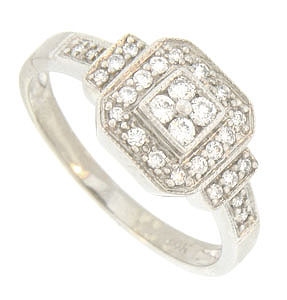
A few weekends ago, my brother married his longtime sweetheart and our close family friend. These two are some of the most beautiful people I know, inside and out, and they put a lot of careful thought into the details of their wedding. Aesthetically, they have an eye for beauty, and spiritually, they have a heart for justice.

This was particularly evident in their choice of engagement ring. I interviewed my new sister-in-law recently and thought you would be interested in hearing her answers concerning the issues surrounding diamonds. And make sure you check out the Marlene Harris website...

1) Dish about the ring! What do you like about it?

"Exquisite" is the word I think of when I think of my engagement ring. It is a new ring designed in an antique style. The thing I like the most about this ring is that I have never seen another quite like it and there is a lot of beautiful detail work. I also like the effect of having many small diamonds surrounding the larger diamond; making it extra sparkly.

2) Did you choose it or did your fiance choose it?

My husband (then fiancé) chose the ring with the help of two very tasteful sisters who both knew me well.

3) Where was the ring bought? And why?

The ring was purchased from Marlene Harris who is a small business jeweler in Blawnox, PA (right outside of Pittsburgh). I believe Daniel chose to go there because a number of our friends had bought their engagement and wedding bands from Marlene and he had heard good things about her collection.

http://www.marleneharriscol.com


4) Are you happy with the ring?

I am happy with the ring. I do not know if I would have picked it because I had something much more simple in mind but I am very happy with it.

5) Why did you want a conflict free diamond?

A conflict free diamond was very important to me because, particularly in Africa, diamond sales have been known to support slavery, violence, and in general the exploitation of communities and peoples. I knew that this ring is likely the most expensive item that I will own and I did not want the money to support the suffering of individuals. I also did not want to feel guilty about something that so beautifully symbolizes the covenant that Daniel and I were to make to one another and to God.

6) How important was it to you to have a conflict free diamond?

I felt very strongly that I wanted a conflict free diamond. Daniel and I had a conversation about it so I was confidant that he would keep my concerns in mind. I definitely would have been disappointed if he had not gotten a conflict free diamond.


7) When did you first think about wanting a conflict free diamond? What caused you to consider it?

My family has a good friend from Sierra Leone and I remember him talking about how his country had very valuable resources, particularly in diamonds, and yet his people were living in severe poverty and devastation because of exploitation and oppressions that had taken place in that land. I believe that was the first time I was made aware of the issues surrounding the diamond industry.

8) Can you explain the issue of conflict free diamonds to us?

A conflict diamond is a diamond that has been illegally smuggled and sold on the open market. The proceeds of these sales have been known to financially support violence, slavery and manslaughter. In Sierra Leone the diamond industry supported a brutal civil war that devastated the country and destroyed the lives of many. The rebel forces that had control of many of the diamond mines would smuggle the gems to dealers who would then place them on the open market. The money from these sales went to support the rebels in their merciless campaigns. These forces were known to use amputation as a weapon against villagers and would also enslave their captives forcing them to dig, at gunpoint, in search for gems. Although the civil war is now over, the effects and devastation remain. In a 2007 National Geographic documentary called Diamonds of War: Africa's Blood Diamonds, it was estimated that 60% of Sierra Leone’s diamonds are sold illegally and placed onto the open market. In addition to supporting potentially dangerous organizations and groups, the profits from these diamonds are not shared with the people of Sierra Leone because there is no way to tax the profit sales or registration of the stone. This is just one example of the devastation that conflict diamonds can have on a country and its people. Other African countries have also experienced the effects of this illegal market. Here is a link to a page that has more information on this topic.

http://www.un.org/peace/africa/Diamond.html


9) What advice do you have for couples thinking about buying a diamond?

Do your research. This may be one of the biggest purchases that you make, so just think about it and make sure you are on the same page.

10) What thoughts do you have for someone who does not have a conflict free diamond and starts to feel concerned about the issue? How should they feel about their ring?

Well if you really want to find out what the origin of your diamond is then talk to your jeweler. No matter its origin, the diamond that your husband/fiancé gave you has meaning because it symbolizes his commitment to you. That alone makes it special and the chances that your diamond was illegally sold onto the market is still relatively low.


~Hannah